Starting a company in India used to mean spending weeks running between local government offices, collecting physical stamps, and filling out endless stacks of paper. That whole headache is pretty much gone now. Today, you can handle the full setup right from your laptop in a few days.
Getting your company registered online is the basic step to turn your idea into an official business. But more importantly, doing it right opens the door to major government perks under the Startup India scheme.
If you’re launching a business soon, setting up your online company registration in India the right way from day one can save you serious tax money, keep legal issues away, and help you hang onto your early funding.
Why Online Company Registration in India is Your First Step
You can’t ask for government benefits until your business actually exists on paper. The Ministry of Corporate Affairs (MCA) takes care of this on their main web portal.
Here’s the catch—the Startup India program doesn’t hand out perks to just any business structure. You have to register under one of three specific types:
- Private Limited Company (Pvt Ltd): Pick this if you plan on raising money from angel investors or VCs down the line.
- Limited Liability Partnership (LLP): Works great for co-founders who want simple management with limited personal financial risk.
- Registered Partnership Firm: A basic partnership, as long as it’s officially registered under the Indian Partnership Act.
Note: Sole proprietorships, local shop setups, and public limited companies don’t qualify for Startup India recognition.
Who Qualifies for Startup India Perks?
After finishing your company registration in India online, you’ll get your official Certificate of Incorporation along with your PAN and TAN. Once those are in hand, you can apply for government recognition.
The baseline rules are pretty straightforward:
- Company Age: Your business can’t be more than 10 years old.
- Revenue Limit: Your annual turnover must stay below ₹100 Crore for every single year since you started.
- Innovation or Growth: You need to be building something original, upgrading an old process, or working on a model that can scale up and hire people.
- Fresh Start: You can’t just break up or rename an old business and call it a new startup.
What Do You Actually Get After Registering?
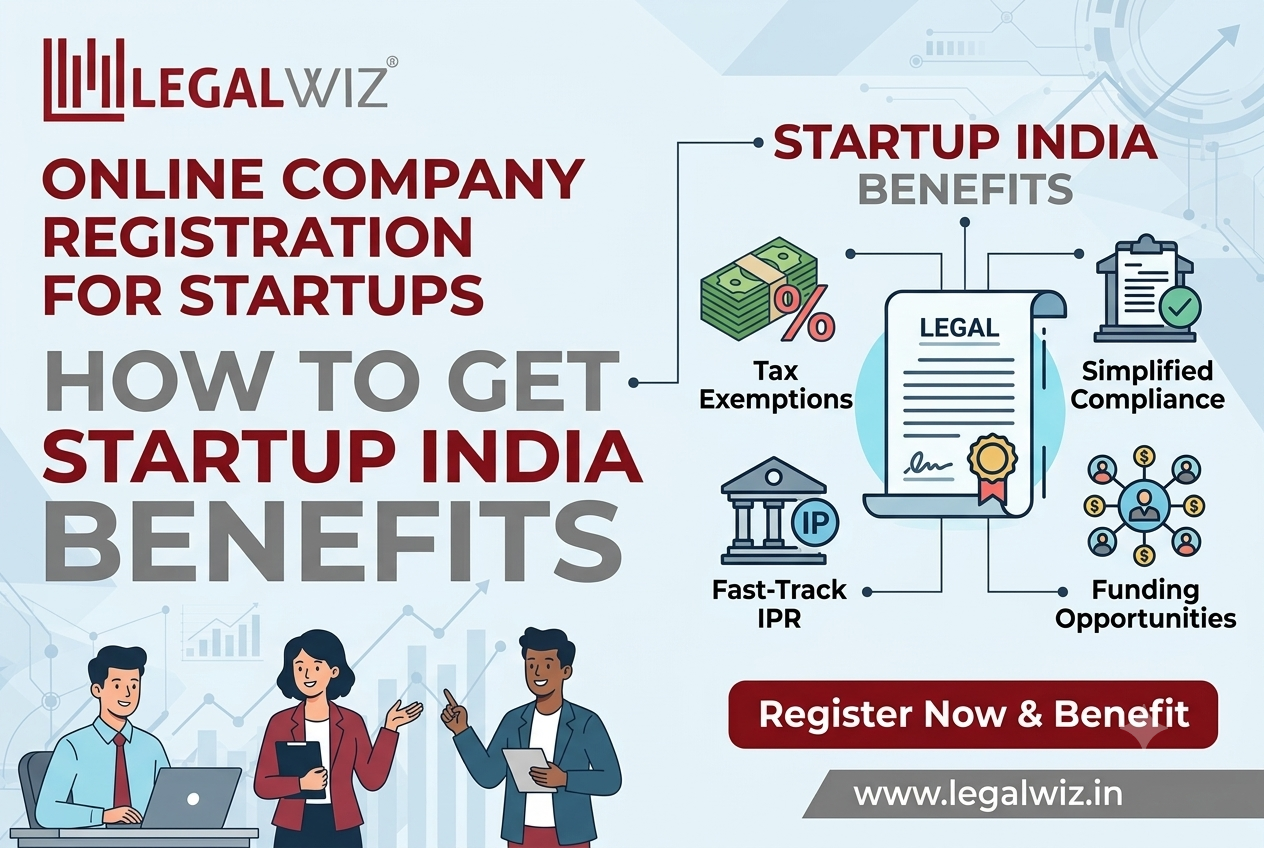
Getting your online company registration in India completed and landing DPIIT (Department for Promotion of Industry and Internal Trade) status gives you a few major advantages:
3-Year Tax Holiday
You can apply to pay zero income tax for 3 full years in a row out of your first 10 years of running the business. That lets you put your cash right back into product development or hiring.
Relief from Angel Tax
Raising money at a high valuation can sometimes trigger hefty tax demands for young companies. Recognized startups get an exemption here, making it much cleaner to take early investments.
Lower Fees for Patents and Trademarks
Brand identity matters early on. The government gives recognized startups an 80% cut on patent fees and a 50% discount on trademark filings, plus they speed up the review time.
Self-Filing for Compliance
Forget dealing with constant inspector visits. Startups are allowed to self-certify their compliance across 6 basic labor rules and 3 environmental laws for the first few years.
Easier Bidding on Government Work
Usually, government contracts demand years of experience and massive revenues. They relax these rules for recognized startups, which lets younger companies compete for big public tenders.
Step-by-Step: Going From Registration to Recognition
Here is how the whole flow works in practice:
- Incorporate online on MCA
- Get Incorporation Cert, PAN & TAN
- Create an account on startupindia.gov.in
- Submit DPIIT form with your pitch deck
Get DPIIT Certificate & unlock benefits
- Incorporate Online: Complete your company registration in India online through the MCA web portal to get your official incorporation certificate.
- Make a Startup India Account: Head over to startupindia.gov.in and set up a free profile for your business.
- Apply for DPIIT Recognition: Fill in the application form. You’ll need your registration certificate and a short deck or write-up showing what your business does and how it’s novel.
- Get Your Certificate: Once approved, you get a recognition number that opens up all the tax and compliance perks.
Bottom Line
Handling your company registration in India online isn’t just about ticking off legal boxes. It’s a real strategic step. Picking the right setup on day one gives you a clean runway for fundraising and lets you take full advantage of India’s startup ecosystem support.
FAQ
Q1: Which types of business entities qualify for Startup India benefits?
A: Only Private Limited Companies, Limited Liability Partnerships (LLPs), and Registered Partnership Firms qualify. Sole proprietorships and unregistered entities are not eligible until they incorporate into one of these structures.
Q2: Is there a fee to get DPIIT recognition on the Startup India portal?
A: No, the DPIIT recognition process on the official Startup India portal is completely free. The Government of India does not charge any application or processing fees.
Q3: What are the main tax benefits available for recognized startups?
A: Eligible startups can apply for a 100% income tax exemption for 3 consecutive years under Section 80-IAC and exemption from Angel Tax under Section 56 of the Income Tax Act.
Q4: How long does it take to receive the Startup India Recognition Certificate?
A: Once you submit your application along with the incorporation certificate and a write-up on your business’s innovation, approval typically takes 2 to 7 working days.
Q5: Can an existing company apply for Startup India benefits?
A: Yes, an existing business can apply if it is under 10 years old (up to 20 years for DeepTech ventures), has an annual turnover under ₹200 crore, and was not formed by splitting up or restructuring an existing company.